Welcome to the 31st Nordic Conference on Secure IT Systems (NordSec)
Aarhus University will host NordSec 2026 on November 11-12, 2026 in Aarhus, Denmark.
NordSec is an annual research conference series that has been running since 1996. The NordSec conferences cover a wide range of topics related to IT security. The events bring together security researchers from the Nordic countries, Northern Europe, and beyond. In addition to being a venue for academic publishing, NordSec is an important meeting place for university faculty, students, and industry researchers and experts from the region.
NordSec addresses a broad range of topics within IT security, bringing together computer security researchers and encouraging interaction between academia and industry.
Download CFPUpdates
- 2026-03-25: Website launched
- 2026-03-25: Call for papers announced
- 2026-08-04: Submission link and Programme Committee members added to the Website
- 2026-08-14: Important Dates updated to extend deadlines for submission
- 2026-10-09: Registration opened
- 2026-10-13: List of accepted papers published
Accepted Papers
Conference Program
The detailed program will be announced closer to the conference date.
Day 1 - November 11, 2026
Registration, opening ceremony, and keynote sessions.
Day 2 - November 12, 2026
Technical sessions and closing ceremony.
Keynote Speakers
We are pleased to announce our distinguished keynote speakers.
Keynote 1
Speaker and topic to be announced.
Keynote 2
Speaker and topic to be announced.
Registration
The Conference registration fee includes attendance at NordSec 2026 sessions, conference pack, welcome reception, coffee breaks and refreshments, lunches and conference dinner. Payment is possible by Credit card or Bank transfer. Registration fees are non-refundable. For authors of accepted papers:| • | At least one author per paper must register as a regular participant |
| • | Author registration deadline - 16.10.2026 |
| Until 31.10.2026 | From 1.11.2026 | |
| Regular Participant | 2.900 DKK | 3.200 DKK |
| Student Paticipant | 1.800 DKK | 2.200 DKK |
| Companion Ticket | 800 DKK | |
(The default language on the registration site is regretably Danish, but it can be changed to English in the top right corner).
Important Dates
Paper Submission
- Submission of manuscripts:
August 17, 2026August 27, 2026 (AOE) - Notification of acceptance:
September 19, 2026September 25, 2026 - Camera-ready version due:
September 30, 2026October 16, 2026
Conference
- Conference dates: November 11-12, 2026
Call for Papers
NordSec 2026 invites submissions on all aspects of IT security.
NordSec 2026 places a special emphasis on Security and Privacy of Agentic AI and Human-AI Systems, addressing the security, privacy, and trustworthiness challenges that arise as these systems transition from passive tools to autonomous agents capable of planning, tool use, and persistent interaction.
Topics of Interest
- Applied cryptography
- Artificial intelligence and machine learning for cybersecurity and privacy
- Blockchains
- Cloud security
- Confidential computing
- Cognitive security, disinformation, and AI-enabled manipulation
- Cryptanalysis and cryptographic protocols
- Cybercrime, warfare, and forensics
- Economic, legal, and social aspects of security and privacy
- Formal analysis
- Hardware and smart card security
- Identity and access management
- Information flow security
- Intrusion detection and mitigation
- Language-based security
- Mobile, embedded, and Internet of Things security and privacy
- Operating system security
- Post-quantum cryptography
- Privacy-enhancing technologies
- Security and privacy engineering
- Security and privacy for artificial intelligence and machine learning
- Security and privacy of agentic AI and multi-agent systems
- Security and privacy of human-AI interaction and decision-support systems
- Security certification and standardisation
- Security education and training
- Security management and audit
- Security and privacy metrics
- Security and privacy protocols
- Social engineering, phishing, and AI-driven attacks
- Software security, malware, and supply chain security
- Threat modelling and threat intelligence
- Trust, transparency, and accountability in AI systems
- Trust and identity management
- Usable security and privacy
- Vulnerability testing
- Web application security
Submission Guidelines
Papers must be submitted via EasyChair.
Format
Submissions must follow the LNCS format and should not exceed 16 pages (excluding references).
Anonymization
NordSec uses double-blind review. Submissions must be anonymized.
Submission Link
Papers must be submitted using EasyChair.
Committees
General Chair
| Christian Damsgaard Jensen | Electrical & Computer Engineering, Aarhus University, Denmark |
Program Chairs
| Abhishek Vaish | Electrical & Computer Engineering, Aarhus University, Denmark |
| Aslan Askarov | Computer Scienceg, Aarhus University, Denmark |
Program Committee
| Peeter Laud | Cybernetica AS, Estonia |
| Edlira Dushku | Aalborg University, Denmark |
| Mubashar Iqbal | University of Tartu, Estonia |
| Emre Süren | KTH Royal Institute of Technology, Sweden |
| Paolo Palmieri | University College Cork, Ireland |
| Mohammad M. Ahmadpanah | KTH Royal Institute of Technology, Sweden |
| Amir Ahmadian | Chalmers University of Technology, Sweden |
| Ulrik Franke | Swedish Defence University, Sweden |
| Sedat Akleylek | University of Tartu, Estonia |
| Ismail Hassan | OsloMet – Oslo Metropolitan University, Norway |
| Lukas Daubner | University of Tartu, Estonia |
| Raimundas Matulevičius | University of Tartu, Estonia |
| Rose-Mharie Åhlfeldt | University of Skövde, Sweden |
| Danny Bøgsted Poulsen | Aalborg University, Denmark |
| Nurul Momen | OsloMet - Oslo Metropolitan University, Norway |
| Srinivas Vivek | International Institute of Information Technology Bangalore India |
| Simon Vrhovec | University of Maribor, Slovenia |
| Kimmo Halunen | University of Oulu, Finland |
| Antonis Michalas | Tampere University, Finland |
| Adrian Venables | Tallinn University of Technology, Estonia |
| Hongyu Jin | KTH Royal Institute of Technology, Sweden |
| Nicola Tuveri | Tampere University, Finland |
| Michael Kubach | Fraunhofer, Germany |
| Kirsi Helkala | Norwegian Defence Cyber Academy, Norway |
| Pille Pullonen-Raudvere | Cybernetica AS, Estonia |
| Nuno Marques | Oslo Metropolitan University, Norway |
| Arnis Paršovs | University of Tartu, Estonia |
| Danel Ahman | University of Tartu, Estonia |
| Nils Gruschka | University of Oslo, Norway |
| Marcel Kyas | Reykjavík University |
| Jan Willemson | Cybernetica AS, Estonia |
| Meiko Jensen | Karlstad University, Sweden |
| Liina Kamm | Cybernetica AS, Estonia |
| Erik Hjelmås | Gjøvik University College, Norway |
| Rene Rydhof Hansen | Aalborg University, Denmark |
| Mikael Asplund | Linköping University, Sweden |
| Sokratis Katsikas | Norwegian University of Science and Technology, Norway |
| Juha Röning | University of Oulu, Finland |
| Dieter Gollmann | Hamburg University of Technology, Germany |
| Simin Nadjm-Tehrani | Linköping university, Sweden |
| Diego F. Aranha | Aarhus University, Denmark |
| Christian Gehrmann | Lund University, Sweden |
| Anders Andersen | UiT The Arctic University of Norway, Norway |
| Karin Bernsmed | SINTEF, Norway |
| Boel Nelson | University of Copenhagen, Denmark |
| Lothar Fritsch | Oslo Metropolitan University, Norway |
| Mats Näslund | KTH Royal Institute of Technology, Sweden |
| Toomas Krips | University of Tartu, Estonia |
| Risto Vaarandi | Tallinn University of Technology, Estonia |
| Oksana Kulyk | IT University of Copenhagen, Denmark |
| Sajad Homayoun | Aalborg University, Denmark |
| Jacopo Mauro | University of Southern Denmark, Denmark |
| Elisavet Kozyri | UiT The Arctic University of Norway, Norway |
| Tom Biselli | Aalborg University, Denmark |
| Alessandro Bruni | IT University of Copenhagen, Denmark |
| Vatsala Upadhyay |
Organizing Committee
Local arrangements by Aarhus University.
Conference Venue
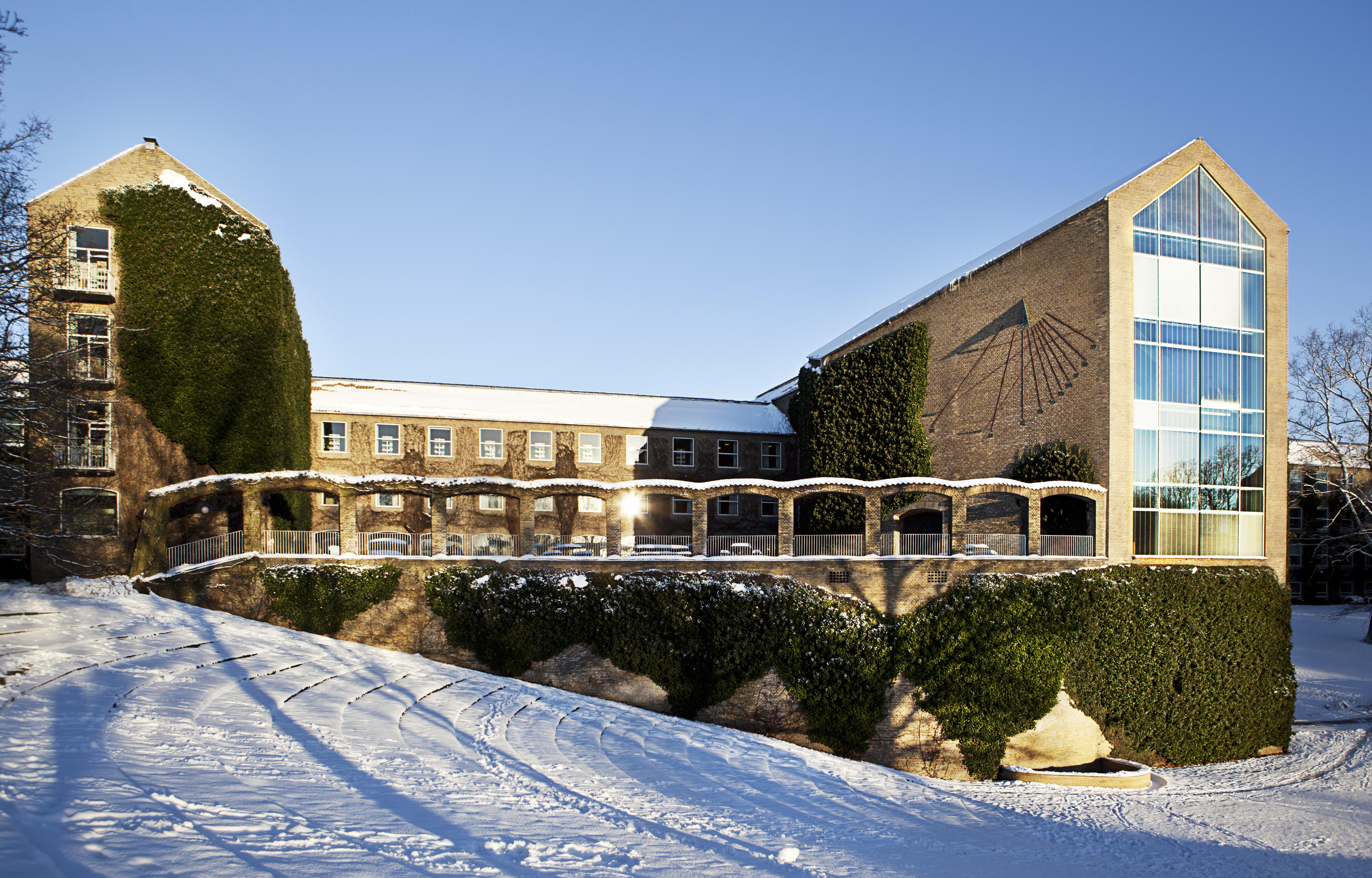
NordSec 2026 will be held at Aarhus University, Denmark.
Location
The conference will take place at the main campus of Aarhus University, located in the heart of Aarhus.
Facilities
The venue offers modern conference facilities, including lecture halls, meeting rooms, and networking spaces.
Travel Information
How to get to Aarhus, Denmark.
By Air
Aarhus is served by several airports:
Aarhus Airport (AAR) has several connections to Copenhagen every day, as well as connections to other airports in Europe. It is located less than one hour by airport shuttle from Aarhus city center.
Billund Airport (BLL) has several connections to copenhagen every day as well as several other airports in Europe. It is located around one hour by airport shuttle from Aarhus city center.
Aalborg Lufthavn (AAL) has several connections to Copenhafen every day, as well as several connections to other airports in Europe. It is located aaround 1.5 hours by train from Aarhus city center.
Copenhagen Airport (CPH) is the main international hub of Denmark, with connections to many european and overseas destinations. It is located around 3.5 hours by train from Aarhus city center.
By Train
Aarhus is well connected by train from Copenhagen (approximately 3 hours) and other Danish cities.
Local Transport
Aarhus has an efficient public transport system including buses and the Aarhus Letbane (light rail).
Accommodation
Suggested hotels near the conference venue.
Hotels
- Hotel Royal - City center
- Scandic Aarhus City - Near the venue
- Comwell Aarhus - Conference hotel
- Cabinn Aarhus - Budget option
More details and potential conference rates will be announced.